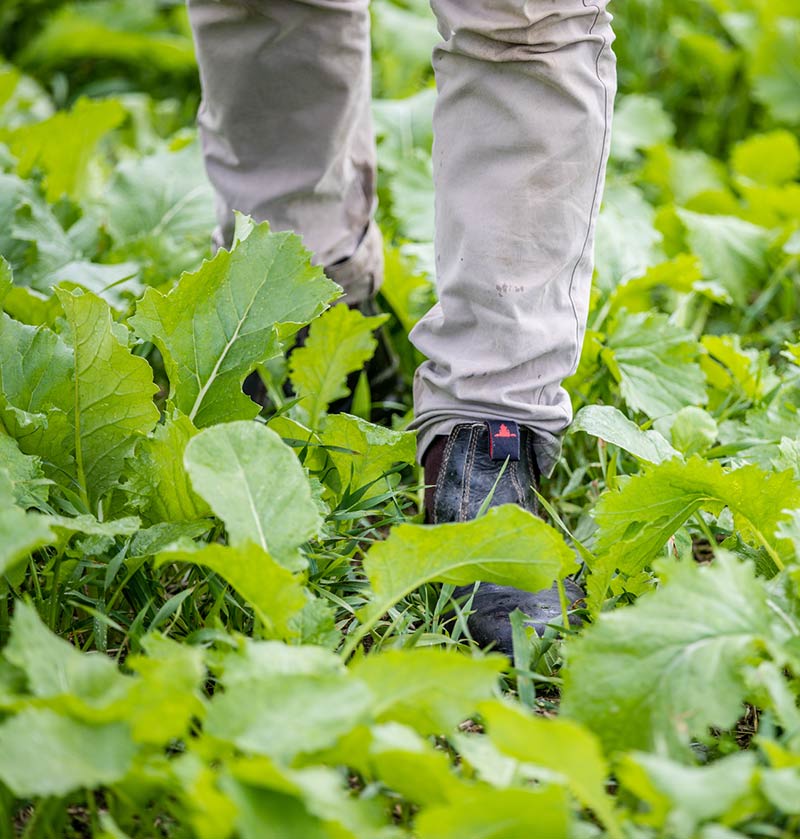
Regenerative agriculture is a conservation and rehabilitation approach to food and farming systems. It focuses on rebuilding natural soil structures and microorganisms, critical for our ecosystems and health. In doing so, it helps improve the fresh water cycle, enhances biodiversity, supports biosequestration and increases resilience to climate change.
Our regenerative farming practices include:
- No glyphosates or pesticides
- No tillage
- Using natural, organic fertilisers supplied by local pig farms
- Using palatable herbage species for soil aeration and climate resilience without the need for water irrigation
- Effective management of livestock levels throughout the year, to ensure our farmlands and pastures are not overworked and soil biology is not depleted
- Recycling as much farm waste as possible